
Why Baristas Prefer Oat Milk Over Almond Milk (2026) | Coffee Guide
Discover why baristas prefer oat milk over almond milk for coffee. Learn about texture, frothing ability, taste and why oat milk is the best dairy-free milk for lattes.
COFFEE SPECIAL
Introduction
The global coffee industry has undergone a major shift in the past decade. As plant-based diets become more popular, cafés and baristas are increasingly using dairy-free milk alternatives.
Two of the most common options are oat milk and almond milk.
While almond milk was once the default dairy substitute, many professional baristas now prefer oat milk for coffee. Its creamy texture, balanced flavour and superior frothing ability make it a better partner for espresso.
In this guide we explain why oat milk has become the preferred plant-based milk for baristas, and how it compares with almond milk in real coffee preparation.
Key Takeaway: Oat milk behaves more like dairy milk in coffee.
1. Creamier Texture for Coffee
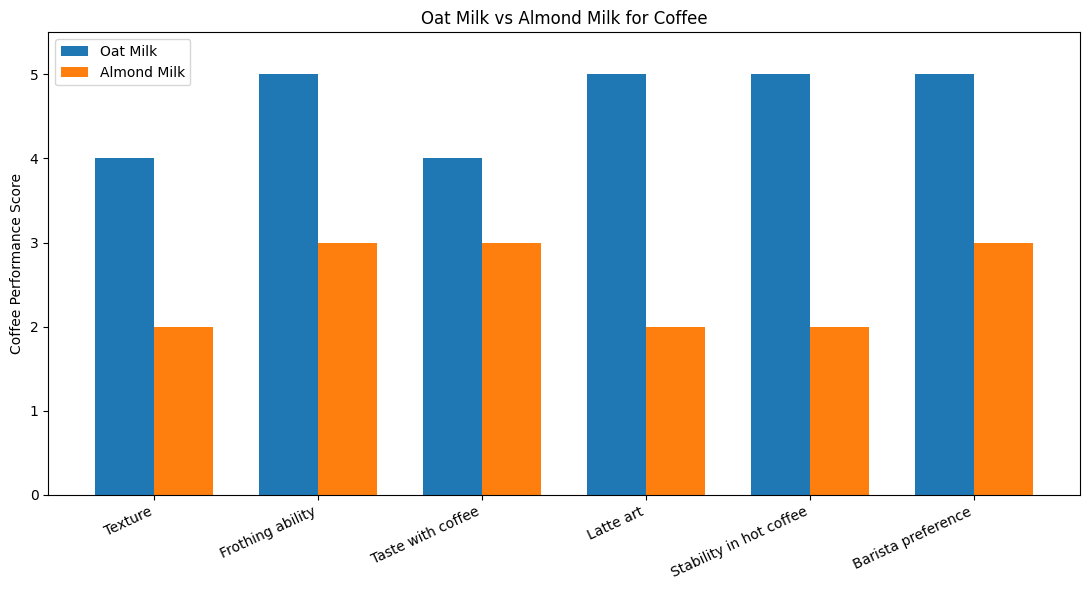
One of the main reasons baristas choose oat milk is its natural creaminess.
Oats contain natural starches that create a smooth and silky texture when blended with water.
This allows oat milk to replicate the mouthfeel of traditional dairy milk more closely than almond milk.
Almond milk, by contrast, is often thinner and lighter, which can make coffee feel watery.
2. Better Frothing for Lattes and Cappuccinos
Coffee drinks such as cappuccinos and lattes rely on microfoam.
Barista oat milk produces stable foam that allows:
• smooth milk texture
• consistent latte art
• creamy mouthfeel
Almond milk can froth, but the foam tends to break down faster and is harder to control.
For professional baristas, consistency is critical, which is why oat milk performs better.
3. Neutral Flavor That Complements Coffee
Coffee is a delicate beverage where flavor balance matters.
Oat milk has a mild, slightly sweet taste that complements espresso.
Almond milk has a stronger nutty flavour that can sometimes overpower the coffee.
For specialty coffee shops that want the coffee flavour to remain the hero, oat milk is usually the better choice.
4. More Stable in Hot Coffee
Another challenge with some plant-based milks is curdling or separation when mixed with espresso.
Oat milk tends to be more stable under heat and acidity.
This makes it reliable for hot drinks such as:
• cappuccino
• latte
• flat white
• cortado
Almond milk may occasionally separate in acidic espresso shots.
5. Growing Popularity in Specialty Coffee Shops
Across Europe, North America and now India, oat milk is becoming the most requested dairy alternative in cafés.
Baristas prefer it because it:
• steams easily
• creates better foam
• blends well with espresso
• provides consistent results
Many coffee shops now offer barista-style oat milk specifically designed for coffee preparation.
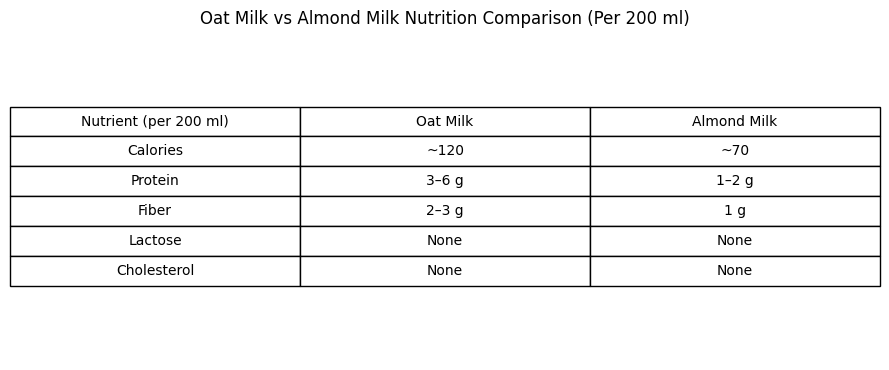
Nutritional Comparison
Both options are dairy-free and lactose-free, but oat milk often provides better texture and balanced nutrition for coffee drinks.
Sustainability Considerations
Sustainability is another reason oat milk is gaining attention.
Compared with almonds, oats generally require:
• less water
• fewer agricultural inputs
• lower environmental impact
This makes oat milk an attractive option for environmentally conscious coffee drinkers.
Why the Coffee Industry Is Moving Toward Oat Milk
Many café owners and baristas are shifting toward oat milk because it provides the best balance of:
• taste
• texture
• frothing ability
• sustainability
• customer demand
For coffee drinks where milk plays a major role, oat milk simply performs better.
Final Thoughts
The debate between oat milk and almond milk continues, but in the world of coffee, oat milk is quickly becoming the preferred option.
Its creamy texture, excellent frothing performance and balanced flavour make it ideal for lattes, cappuccinos and speciality espresso drinks.
As India’s coffee culture grows, oat milk is likely to become the leading plant-based milk choice for cafés and home baristas alike.
FAQs
Why do baristas prefer oat milk for coffee?
Oat milk froths better, creates smoother microfoam and has a balanced flavour that complements espresso.
Is oat milk better than almond milk for lattes?
Yes. Oat milk generally produces a creamier texture and more stable foam for latte art.
Does oat milk curdle in coffee?
High-quality barista oat milk is formulated to remain stable in hot coffee.
Is oat milk lactose-free?
Yes. Oat milk is completely dairy-free and lactose-free.
Can almond milk still be used in coffee?
Yes, but it may not froth as well or provide the same creamy texture as oat milk.
Oatey - A Plant Essentials Private Limited Brand
Plant-based nutrition for a greener future.
Email: info@oatey.in
Contact: +91 7795218855
© 2026 Oatey™ — Plant Essentials Pvt. Ltd. Created by Digital Ishtihaar
Address:
Oatey - Plant Essentials Private Limited
Madhavi, #6, A Sirur Park Rd, Seshadripuram, Bengaluru, Karnataka 560020